Context
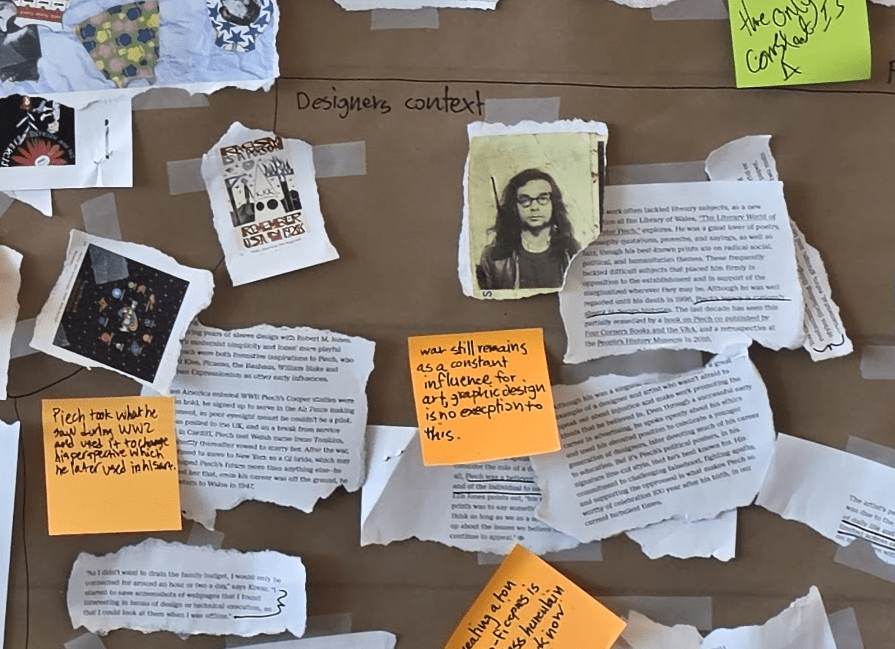
This participatory design experiment is a part of the course ART 388: Graphic Design Studio IV at Boise State University in Spring 2026, supported by a colleague, Mahshad Faridfar. As students wrapped up the course at the end of the semester, they conducted individual annotated portfolio (on Figma) and reconvene for this low-tech participatory design experiment to locate their design practices as a continuous part of the global graphic design histories.
The recent rise of Generative Artificial Intelligence has enabled workforces to maximize the speed and range of creative products, while raising concerns among creative communities. On one hand, this technology expands creative capacity through technological accessibility, while on the other hand, the originality of creative professionals is undermined or even questioned. Given the constant news of layoffs in tech industries due to AI interventions over the past few years, high-tech is frequently framed as a threat to human labor and resources. Some creative professionals are worried about their publicly available artworks being used for GenAI training and want nothing to do with it, while others have adapted this technology in their creative process to stay close to the trends.
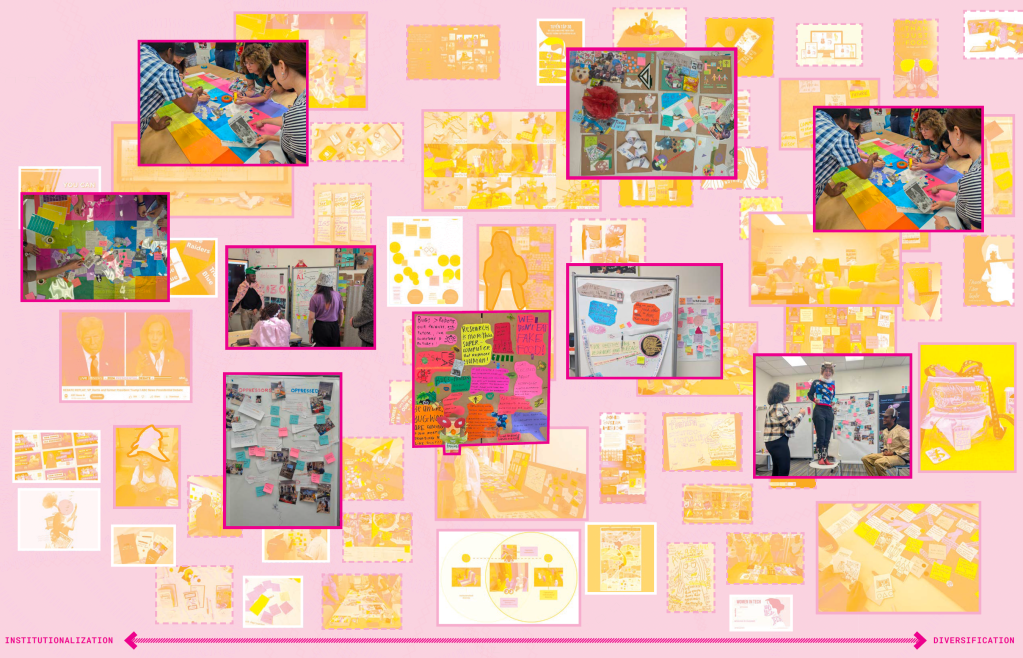
Given that the graphic design discipline is rooted in fine arts and holds up-to-date forms to commercial trends, this high-tech intervention poses an existential question: What changes do graphic designers tackle, given its historical roots and technological advancement as appropriation forces? With this question in mind, the junior graphic design students at BSU dove into curated archives of AIGA Eye on Design, selected data pieces that align with the emerging quadrant model below, and collaboratively visualized the historical, expanded canon of graphic design.
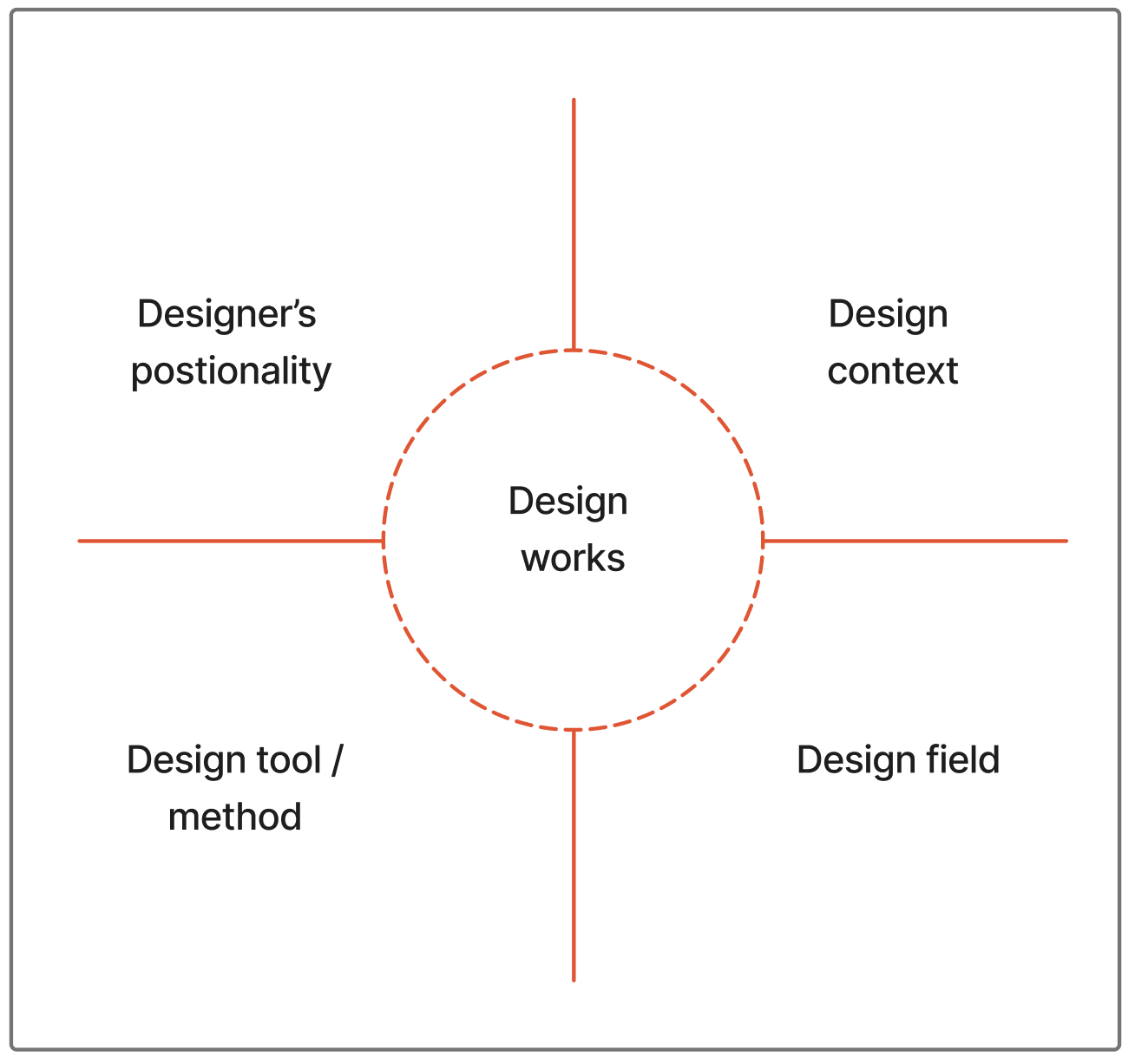
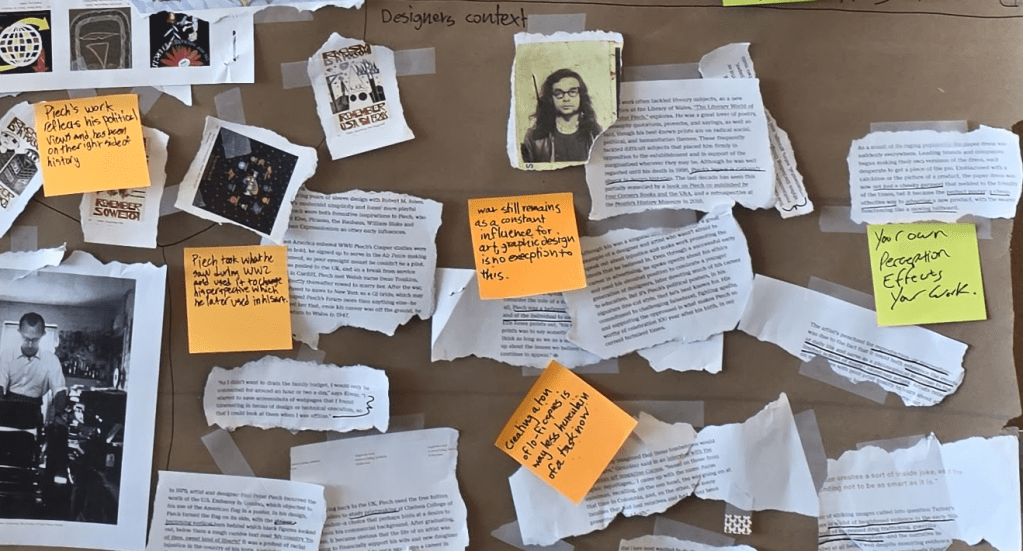
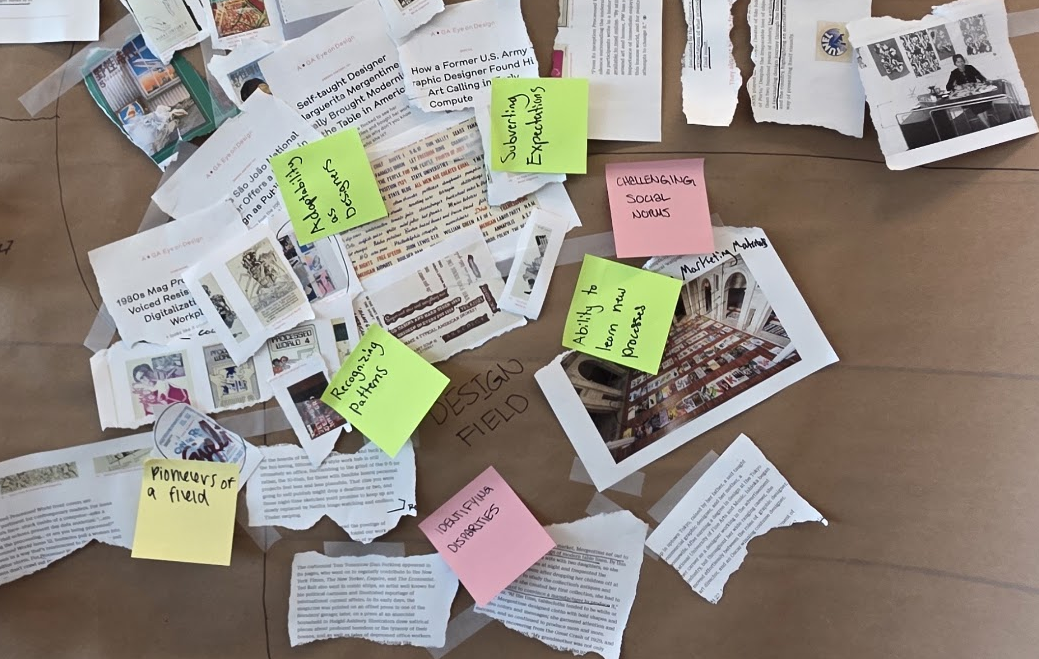
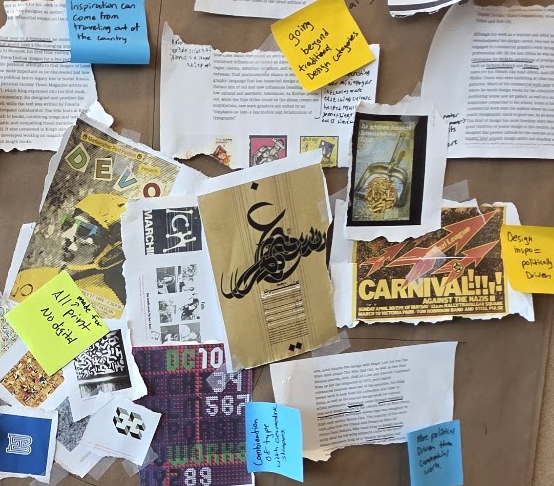
As students read through the archives, they engaged in the manual, low-tech yet bodily experiences of collaborative design: they annotated the reading with pencils or markers, tore the paper textures to select the data pieces, discussed with each other verbally to find a spot on the quadrant model, and shared tapes to stick the data pieces on the model. The intention of this activity was for students to recognize the overlapping interfaces when they physically engaged in the participatory design experiment:
- The first interface was the students
- The second interface was the ongoing graphic design archive
- The third interface was the emerging quadrant model
- The fourth and beyond interfaces were the reference points around this experiment
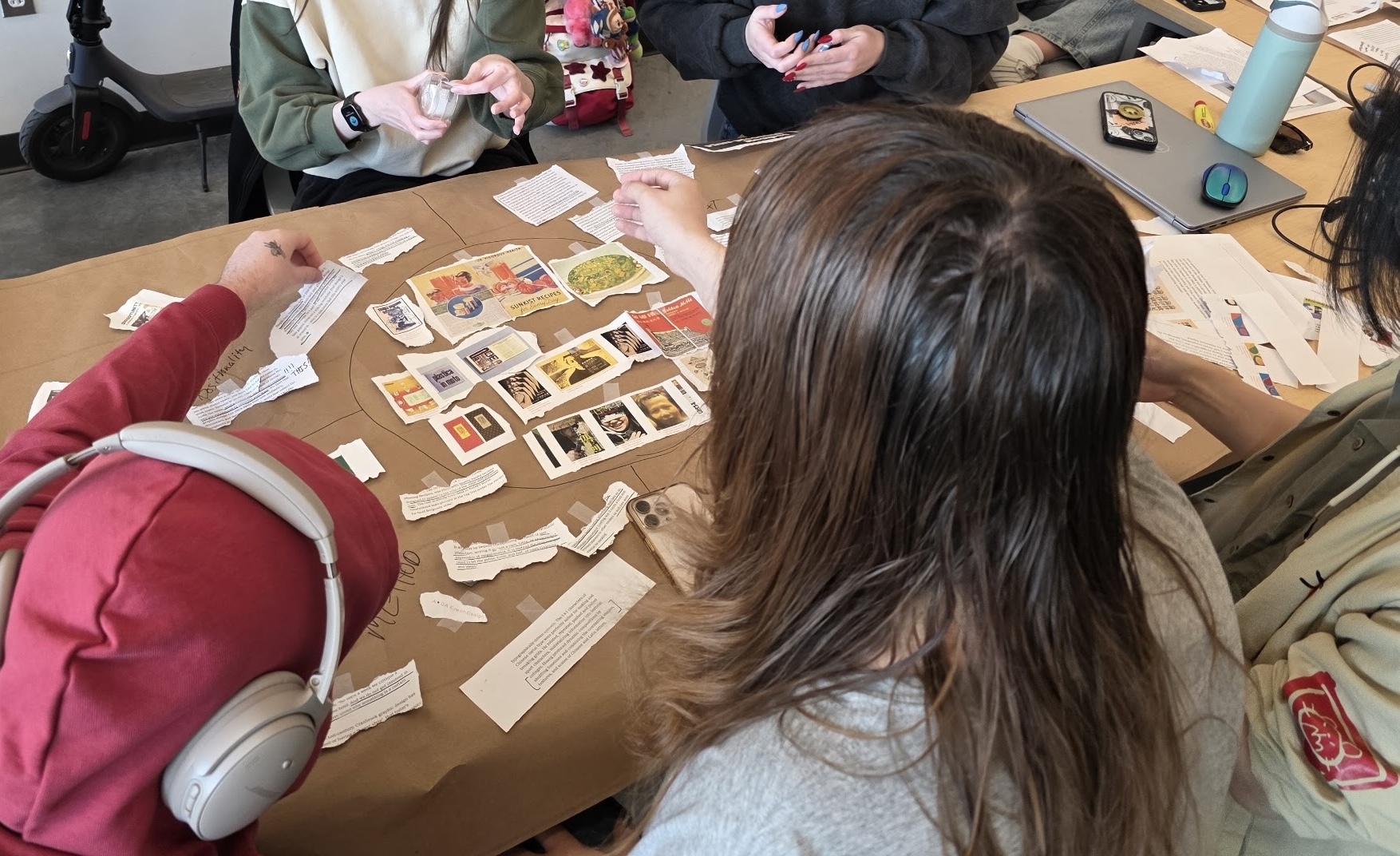
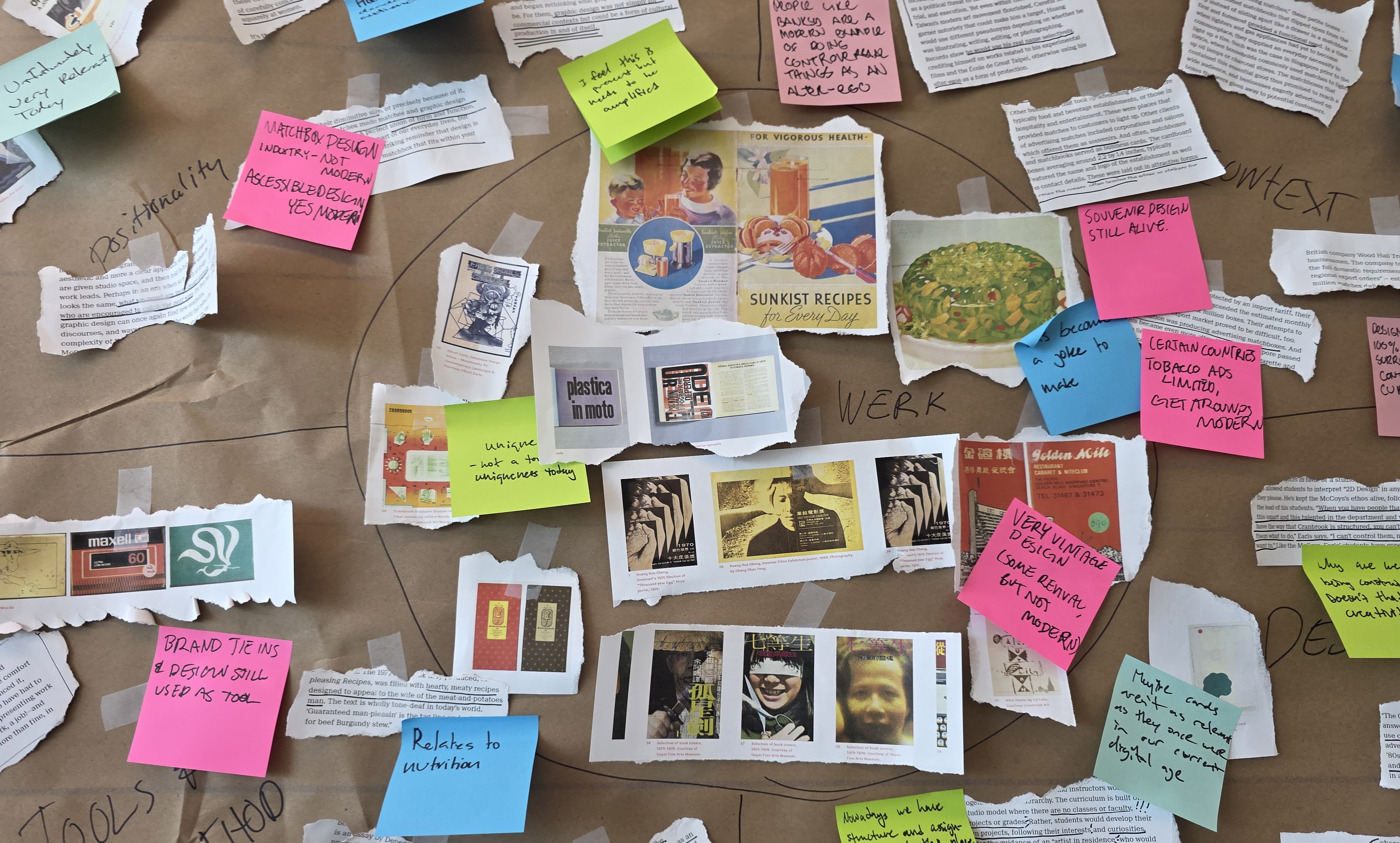
Junior graphic design students gathered in small groups, each of which read through a printed article from the digital archive, manually breaking it into data pieces that align with the emerging quadrant model.
While the design teachers organized this design experiment, these interfaces took place and overlapped intentionally as students followed the facilitation, held conversations, and reflected on their tactile processes. The overlapped interfaces imply that the graphic design process is not a manufacturing process that solely based on high-technology, but many technologies that are interactively facing and engaging with each other: designers, their thoughts, their tactile process, their reference points, design theories, design histories, the context around them, and many others that are not physically there but help building up to that graphic design process.
While the Western creative industry celebrates the integration of GenAI as a smart, efficient facilitation, cultural wars from that very place also frame it as a competition, if not a threat, to creative professionals. Either way, it centralizes high-tech in the modern creative process while pushing other technological interfaces to the background, such as the designer’s positionality, socio-political context, and the flux of meanings in culture-making that creatives are there for. The question should not be how graphic designers should deal with high-tech expansions as a central force, but rather a return to what this has mainstreamingly strayed from: communal languages, culture-making, borderless creativity, and mutualistic interfaces. The question, rather, should be: how do graphic designers deal with the privileges enforced by boundaries of their very own occupation, like colonial histories, commercial products, oriental(ist) aesthetics, and individualistic practices?
 Hien Phan