Context
This is a recorded lecture in Design Technology, Spring 2025, at the University of Florida with the instructor’s writing adjustments after the class.
In this lecture, I would like to go through a bit about my understanding on the relation between designer and technology. It is linked to how I (methodological) approach my thesis and also my understanding (of design) as a graduate student. So, I would like to share what I know with you all. Understanding the lecture as one of the ways to understand technology and designing approaches, so you can see how it goes, experiment with that, and see how that responds to your own design approach. I will share a little bit about how I came to the understanding of the expansive understanding of design technology beyond the Adobe software.
Mostly in design classrooms, we learn to use some popular programs that will be used in design industry. Dominantly Adobe Suites software such as Adobe InDesign, Adobe Illustrator, and Adobe Photoshop. Those three are currently expanded as there is also Adobe After Effects which you tend to produce animations and movies while Adobe Premiere for, I guess, videos – live videos. To understand each software you will need to understand. Like, The toolkits for each software might be might be similar to other toolkits for example, are we after, um, Adobe Photoshop and illustrator are quite similar?
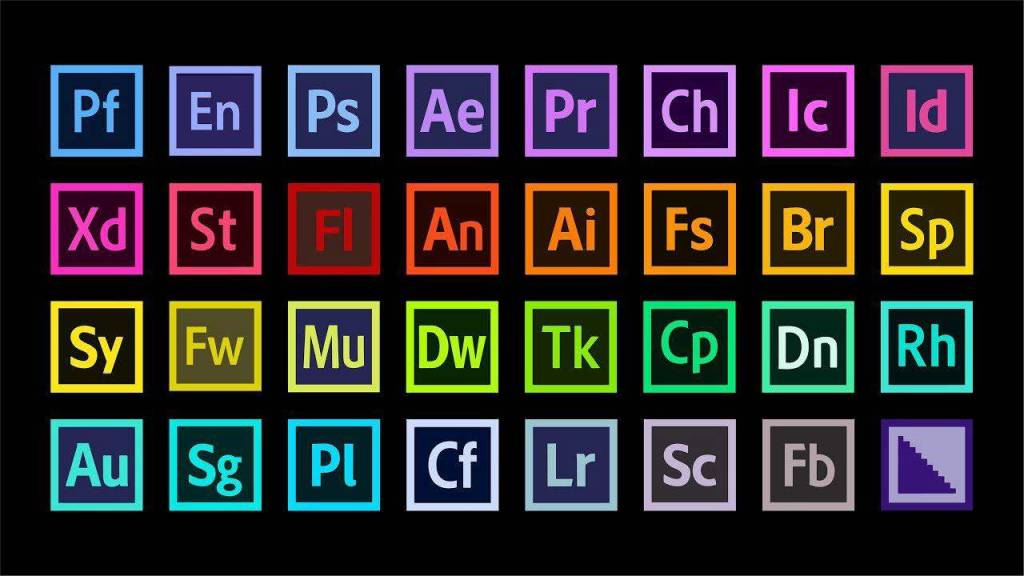
But in different contexts, you would use them differently. Illustrator is similar to After Effects, will be used, mainly for illustration. Sometimes people use Procreate, which is not under Adobe but it’s beneficial for the illustrators that way. Then, Photoshop which has a lot of tools as well. Um, but then, we realized that those Adobe design space asked for a lot of understanding of specific tools within the digital space and a lot of experiments with that. The results are digital convenience: Whatever you do physically, you can do it digitally, right? The design digital space tries to mimic the physical space and that’s why it’s so compacted. However, if now if you’re not experimenting with physical space and jump right away into the digital space, you might need to explore the digital libraries a lot.
When we talked about the software, Adobe is so advanced because it provides compacted design space. But it also provides guidelines towards that space. It is within the space (software) such as tours in Adobe Illustrator but it also has the general dashboard such as Adobe Creative Cloud, (where you can download many Adobe software with certain fee of subscriptions). It now even produces Adobe Express, which is similar to Canva, right? It’s very compacted that now, business services are available and can be searched online, such as one of the student service office that I worked with in the past. The office also wants to increase the interactions online. So, almost every space has an Instagram account or a Twitter account to attract digital users/customers. You don’t have to go to career center to know that it’s physically there. It is there because it has many channels to promote it digitally, right? So that is a very good way… let’s say high-tech is a very great in promoting digital awareness, not consciousness, of the design space, service, and products – what is available out there.
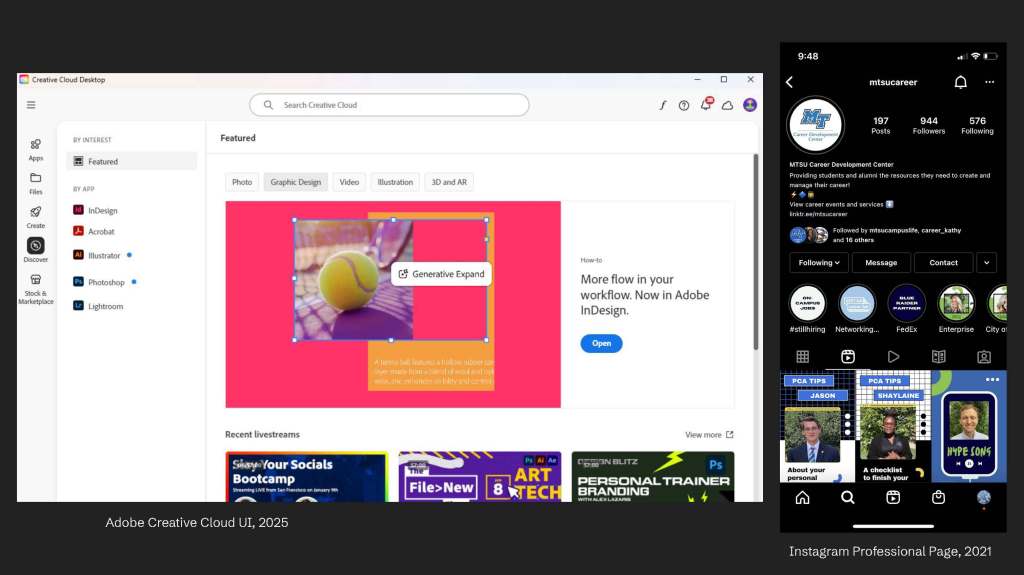
However, what is limited about these vast materials to be uploaded digitally here is that when people see that information are available online, they might not need to go to the space physically. To research, or very closely, to understand the design object and space because they are already available online. Now you go to Pinterest, you go to Google, you go to Behands and Dribbble, which are very popular platforms of designers and then you will understand certain forms of designs and designers. That is how certain design firms will approach their clients. And they did do a great job about that.
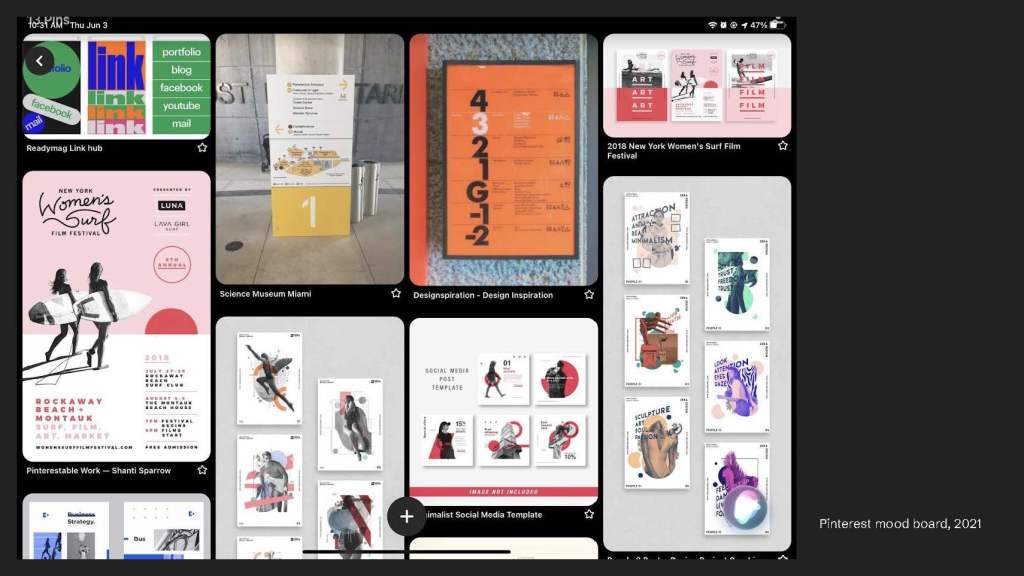
However, to the designers in developing like us, it is not quite a good practice to observe the world or the realities outside the studio only through these digital spaces, right? We know what are some good examples of design, visually, but do we know about what is the connection between the visual aesthetics and what to be designed is actually?
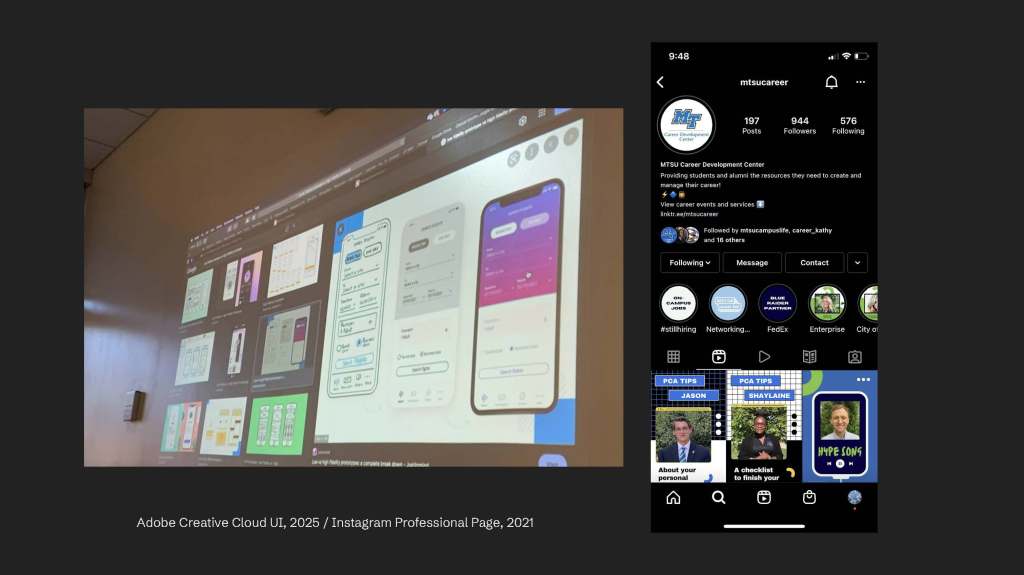
So, that disconnection is what grows interests in me. What is the potential between the actual reality and the visual aesthetics in design? That is one of the questions.
The second question is that because there are so many digital designs space and materials, tutorials are available in a snippet of information so that we can easily search for based on Google search. When you want to Google how to use Adobe pen tool, it will show you many YouTube thumbnails of tutorials. You might choose to watch the shortest even. You might not even have to watch the whole 15 minutes. You can just drag to the time point to understand that specific tool.
This leads us to the understanding of design technology based on the tools, or the specific tools that we want to do. That habit reduces the whole understanding of the Adobe program and how designers actually design the Adobe design space as well as tools. We know how to use the Adobe tools, but we don’t really know how the Adobe tools were created.
The thing here, is that Adobe tools were created based on the reality of how vast materials are. There’s a scissor Cut tool in Adobe that has exactly the shape of the scissors. So as pencil and ruler, right? Digital space is so compacted as it tried to mimic what the reality of space is, we sometimes forgot that we can actually experiment with low-tech materials.
That’s why this class is to try to revisit the reality besides Adobe (or predominantly digital high-tech design space). Not before but besides because like there’s still a good point of Adobe softwares. And you still (are commonly expected) to master the technical skills of it (by the industrial demands and/or your own interests.) But that would be like the very side load of this class. That’s why I’m trying to say.
This is my portfolio page, after I graduate from undergrad. I would like to share with you just because in terms of technical skills, you can focus on mastering it whenever you have the contents of you want to design. It’s not necessarily based on a project from design class. Usually, after a class, especially when you are just freshmen and sophomore, you will advance your sense of aesthetics and your technical skills as you grow. You then will revisit the projects and will even redesign the class projects.
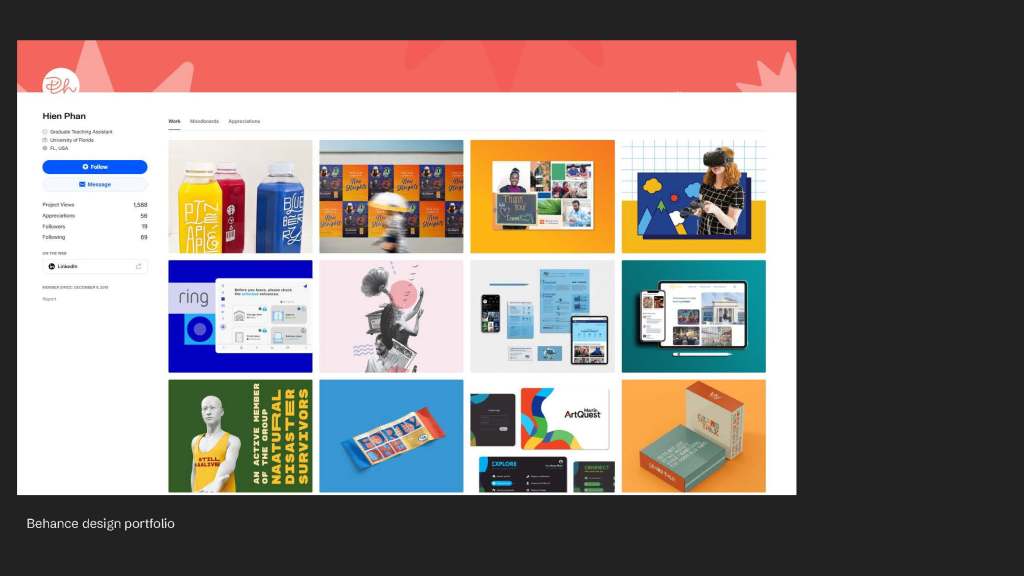
With the technical skills, you can practice and advance that anytime. But the thing that I want to emphasize here is the contents to be designed, not how it should look. But what it designed, actually? What do we design for? What is the content that we want to communicate through visual design?
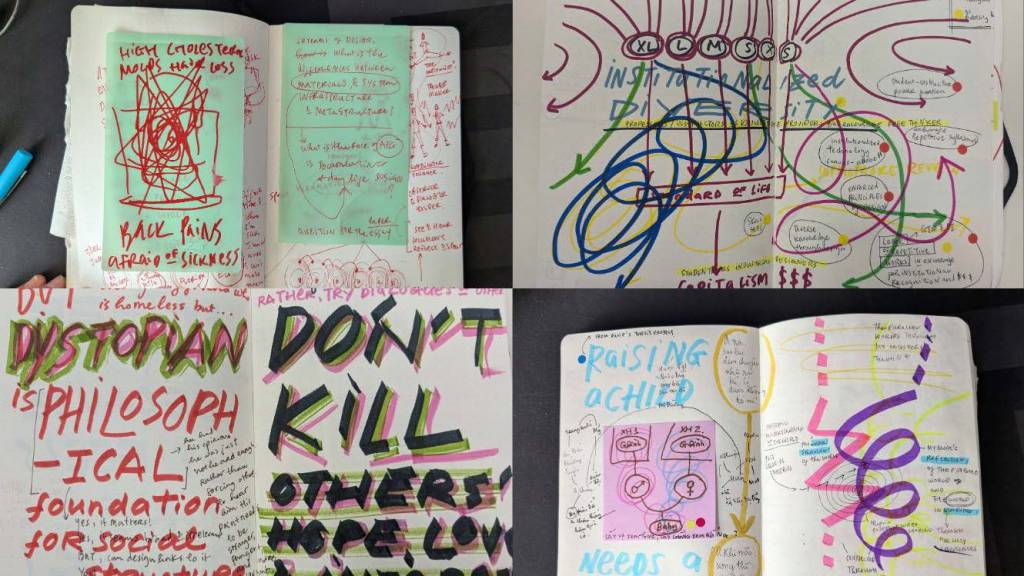
That is what I want to emphasize and that’s why visual journal is there for you to document what is going on. You can approach visual journal objectively if you want, but the thing here about the journal is that it’s so personal. Observations that you do is based is based on where you work to and how to interact with people and things. So, the visual journal is (a part of) the results of your interactions with things around you. That’s why it’s so subjective but that’s also why you know it better. So when you know things better, you know, when how to design within the reality that you actually observe it.
This is how I understand digital design technology (high-tech) in relation to designer. Designers use digital design technology, increasing the accessibility to show their works to other. Potential design collaborators who might hire you in the future or who might work with you in the future or potential users. If you happen to create your own agency in the future, right?
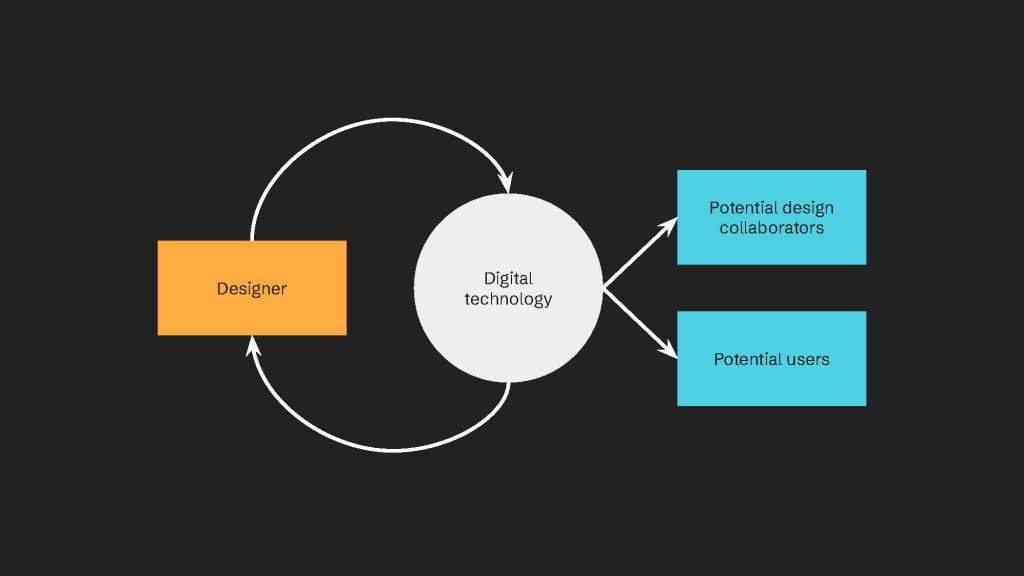
But there is a thing that I learned about publishing or sharing works digitally. Not too bad but… When I publish my words and share on Instagram and websites: the website is not always the design space that I understand it (completely). There are many website platforms and hosts where designers might need to learn the codes to understand how it functions between the front-end and back-end.
So, as a quick solution, I decided to share it on Instagram. But on Instagram, there’s so so many… let’s see… codes of what to say and what not to say, because of the policy of the Instagram. If I want to understand what the link between design is, designer, and the social issues, the contents sometimes are blocked because of the Instagram policies.
The technology is not actually that objective because it is controlled by whatever worldview or politics of that technology owner, right? It also depends on external factors such as there might be scammers, even to a professional business page. And the posted data would be gathered by artificial intelligence to distort the kinds of information that you want to provide through the social platforms. (We’ll go through them more later in this semester.)
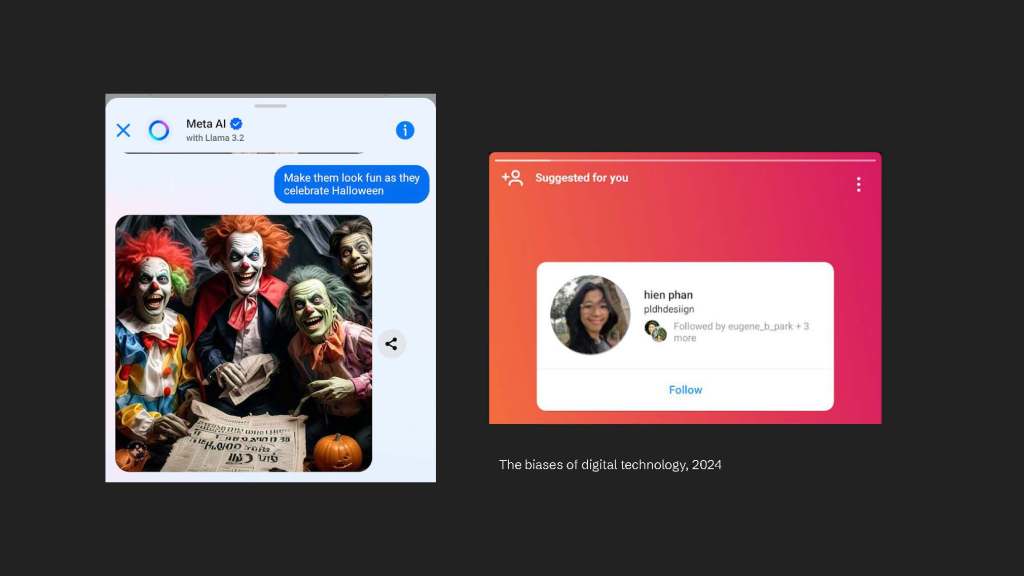
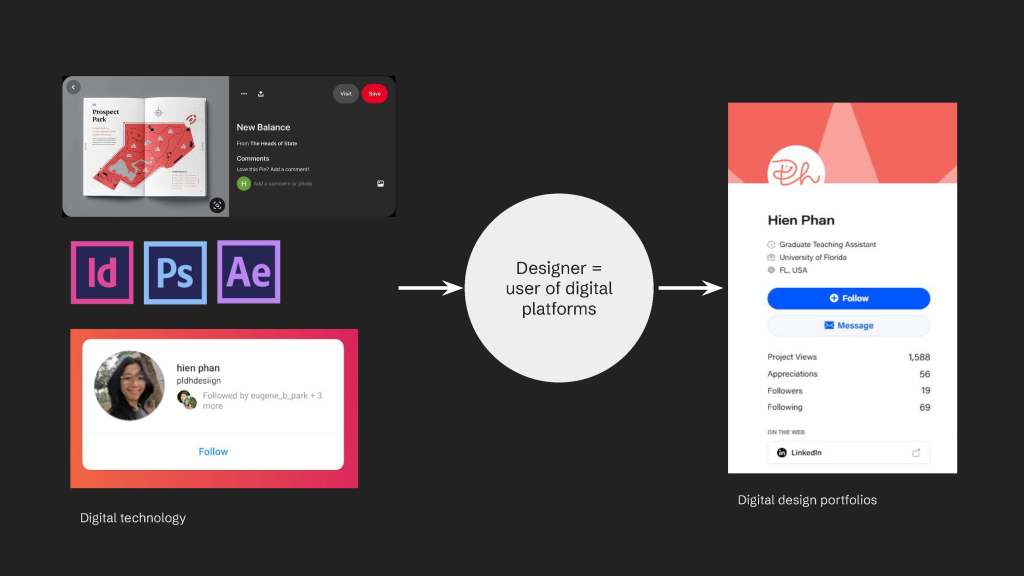
As you see, uses and experiment with everyday digital technology social platforms such as Instagram and Facebook. They are all design technology as well. But the question here are: Do you use it or do you design it? Do you understand it as a designer or do your understand it as a user? What are some external factors that could distort your interactions with those design platforms? There’s so many things that we want to design but also so many things that we don’t understand. So hopefully this course will be for you to debunk those that you don’t understand yet through technologies.
I understand your common expectations on learning technical skills, as throughout my undergrad, I weas also like you now. I do have a great hope of getting recruited after I graduate. I also understand that the requirements of getting a job also puts too much emphasis on comprehending technical skills. That’s why I know the Adobe software at the time. Well, but then, the emphasis on what I want to design was not highlighted, because we all together emphasized too much on technical skills. That’s also why let’s try to stay away from that common approach. So what are other ways?
We are already discuss about this a bit from our syllabus. I built on my interest in low-tech materials based on this concept which is handiness that is developed by Dr. Frederick van Amstel, the committee chair of MFA thesis. So, I do refer to what I learn from him (quite often actually):
“Handiness is a historical relationship between what is badly available to a human body and the work involved in making that available.”
Dr. Frederick van Amstel, MxD Seminar lecture, 2024
What do you understand about this concept?
[Student A response] The relationship of design to the importance of it. So for example, this chair. You would just sit in this chair as a consumer, if you will. But as a designer about how, the people are sort of them, how this is putting more thought through the things to make, like, easier better or to get a certain message at all times. That’s what I’m understanding. Yeah.
Anyone else?
[Student B response] And plus, Idea. Yeah, maybe changing it. Creating something new about using.
Okay, so that’s you… I think you’ll understand it also. Another thing that there are, there are different examples of the results of handiness. Right? So let’s talk about the results a little bit. This is the result of a student’s handiness, which is if we think about this, with handiness as how the package was crafted. We can see the cracking folding line as a result of her folding – the designer’s craftmanship. That is the immediate example of the results of the craftsmanship. But also, as you said, the chair is also the results of handiness.
Let’s see. (The brand is) Herman Miller. It’s probably… Let’s see what and where Herman Miller is.
“Herman Miller is the brand that has been established for more than 100 years”
And it has the websites. So it might be from Florida, might be from Gainesville, or it might be far away from it, but it’s still a result of the further further explanations of handiness. It’s from elsewhere because it’s mass produced in this classroom. So it’s probably directly from a machine rather than human (directly) producing and touching them. But before the industrialization process, designers will need to sketch it out in paper or the computer. It’s still the production of their (design) bodies – handiness! Eyes and hands moving, etc.
But another thing here is that when we use it. This one (the green chair) is still new because it’s the beginning of the year, the beginning of the semester. However, when the chair is broken through time, it could be in the trash can. So, when we understand about the products, which are the results of handiness, which is linked to human ourselves, as designers and users, the products are (the handiness) of time as well. Between the human body and the design objects: design, our usage, waste, to our recycle. It could have another lifetime, so on and so forth. But the idea here is that things around us, everywhere, are the results of handiness.
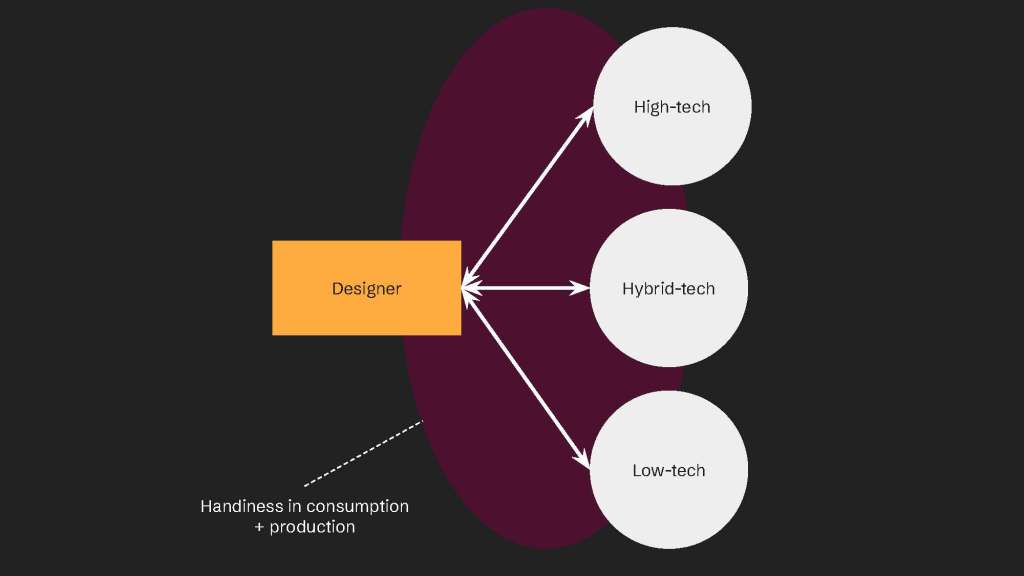
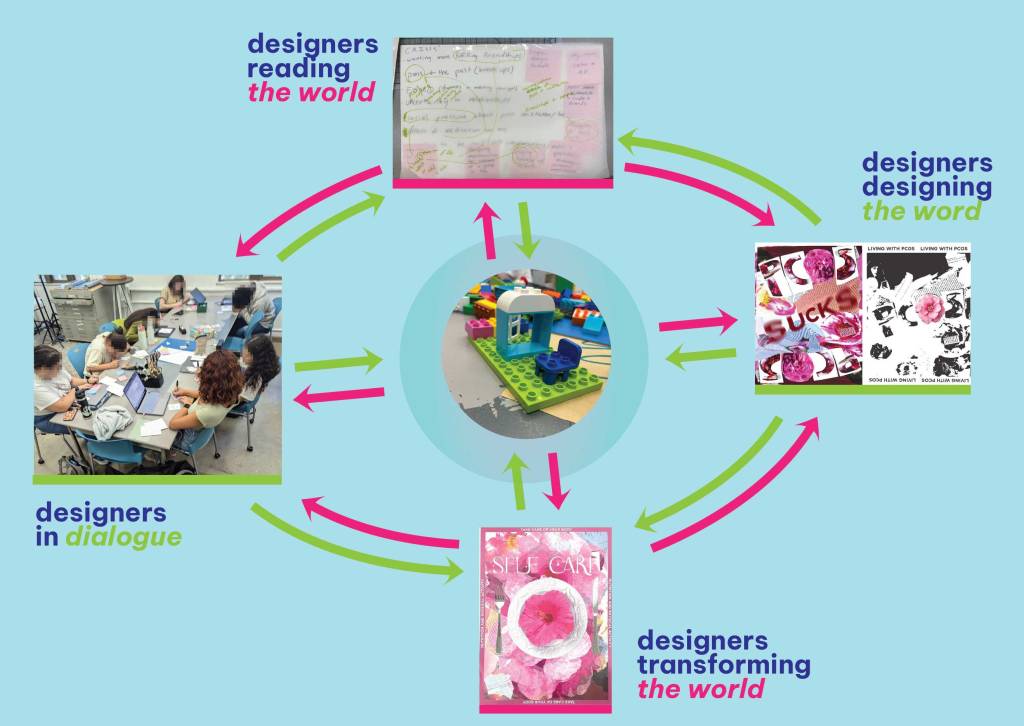
That’s the idea. So even when this is the design space, it is till the product of handiness. In terms of what is the relation between designer, design, handiness, use, and user, then we can think of it that way. (The shade in presentation) is not so clearly displayed here but that (zone) is handiness – the interaction between designers and all the kinds of technology. The visual journal that you will do for this course is to observe that handiness, which is the interaction between body, whether that is the designer or user, and the design technology.
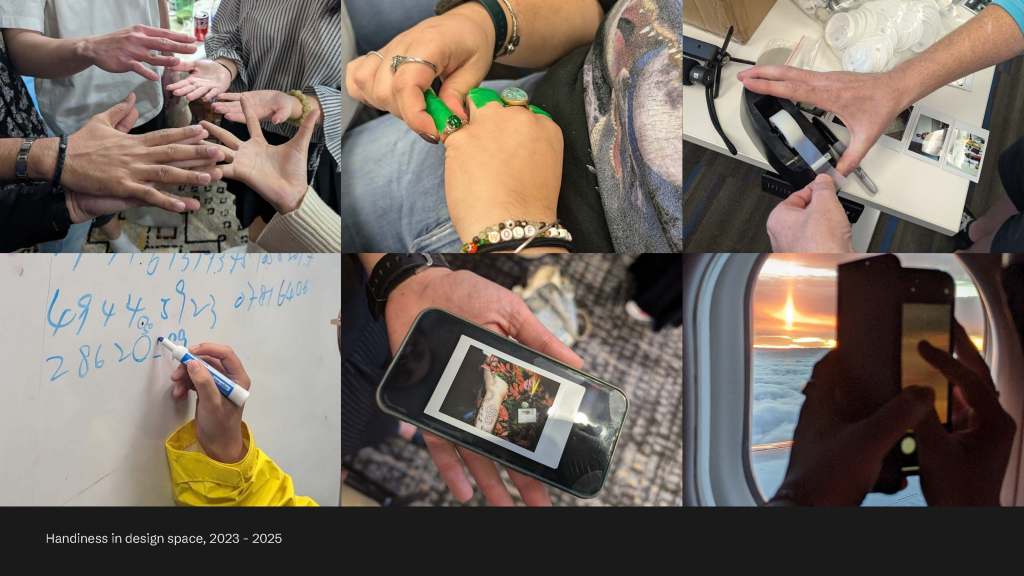
Here’s the very clear example of where the hands have touched and the hands have used. This is one of the emphasis that I want to point of what is directly from hand – (the design objects are) physical and distortable. Then, they can be understood as the expansive understanding of digital design technology, which is low-tech. But we’ll go through that another time.
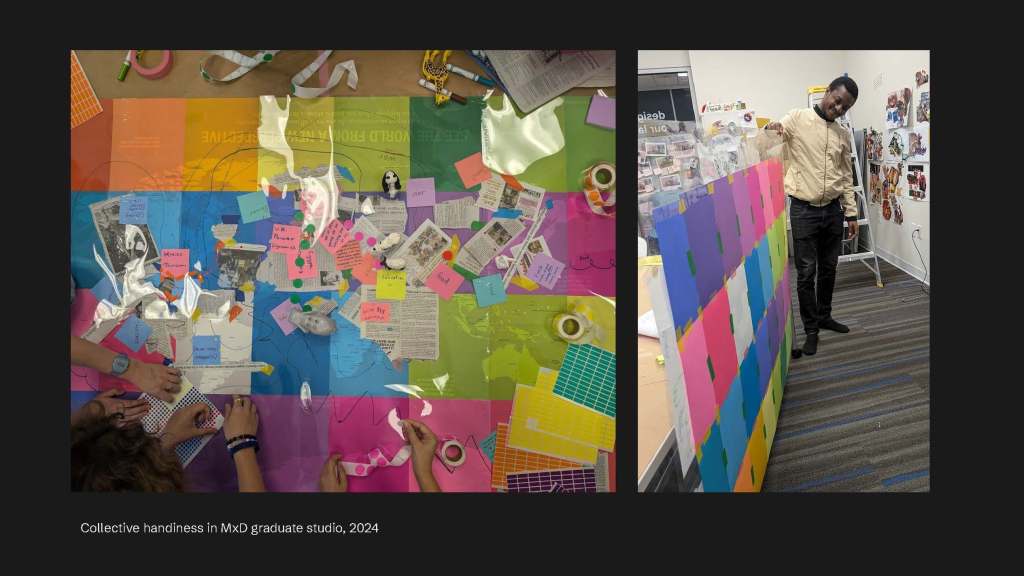
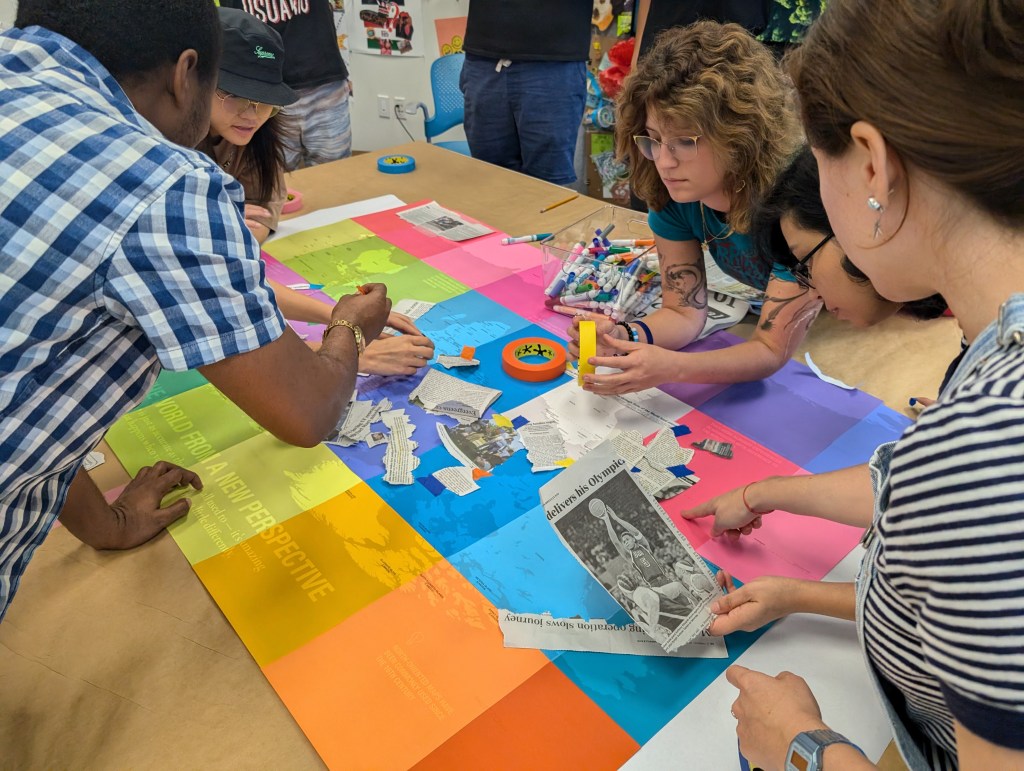
This is in our graduate studio, the MxD, and this is Sharif – another graduate teaching assistant. Through our graduate studio, we researched the possibilities of design. That’s why we use many, many low-tech, materials include tapes, papers, color labels, newspapers, and whatever recyclable materials. So any materials that are in its lifetime, then we use them for us to disclose our understanding of selves and what’s around us. Here, handiness is vividly observed as a result of something to be displayed on the table. Because of that, as I said, designers brought in the design projects with their positionality – worldviews, through the (low) design technology that they interact with during this project/process. You can to this understanding through, I bet that you already take, the design and identities course or the Design Studies course.
Okay, the emphasis of that one is designed and identities.
So you can link to your understanding of designer’s positionality based on your understanding of yourself from that course, right? And this is one of the examples. Design your journal, definitely. Uhm, this has been through many, many like Coke, soda, and rain, etc but I bet that is one of the interesting aftermath or interesting results of the (social) contexts that you observe from within. The context that you carry your journal around!
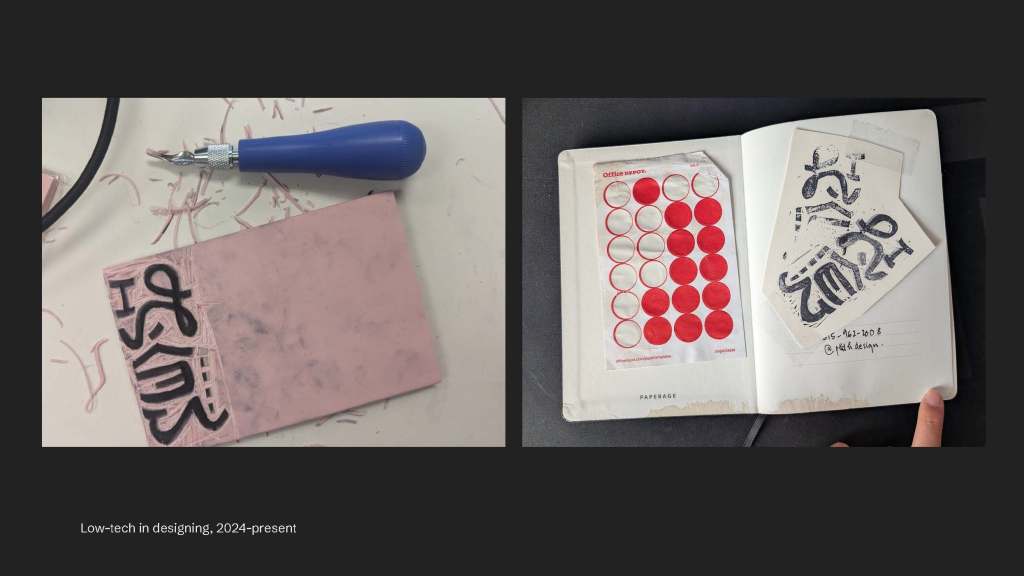
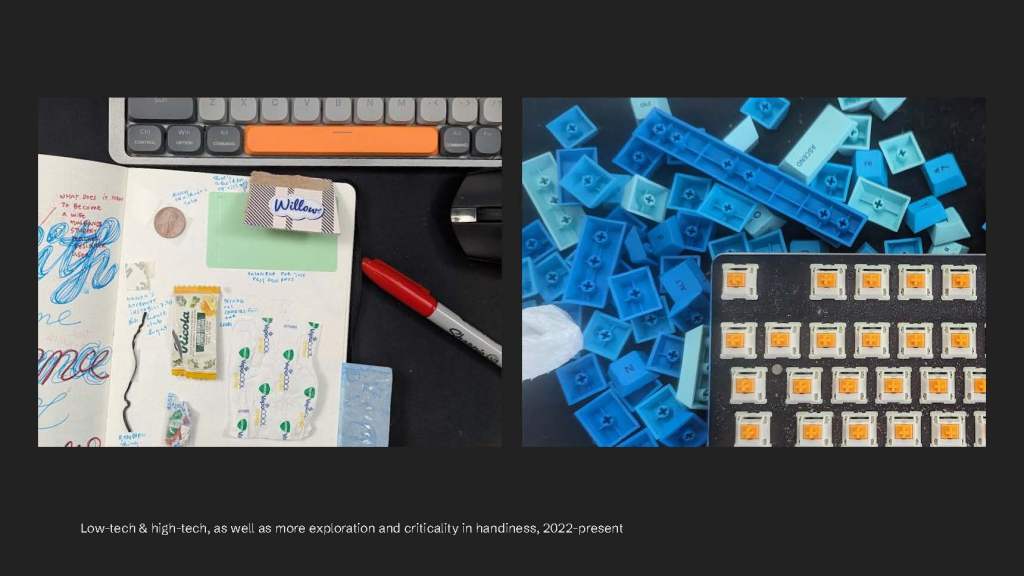
And this is one of the examples of how your journal or how you can explore with your journal. You can see that, in terms of the context, there have been many materials used. This one is the recycled materials. This one is from color markers and also the point pen, I guess. And this one is sticky notes that I gather from a conversation with my friends and my family members. So it’s been through everywhere. So you can see the possibilities of journal in terms of documenting the handiness and design objects around your space.
This is one of the things that I would like to emphasize is when you learn about design technology. I think more than just use it. Well, actually, I think we would like to know more about the technology. Even that means repurpose the use of it or use it differently besides the guidelines – the industrial guidelines.
Acknowledgements: This lecture is developed based on Dr. Frederick van Amstel’s MxD Seminar lecture in Spring 2024, specifically the emphasis on concepts Handiness, Design Body, Design Space, Positionality, and Low-tech. It is then further researched in Hien’s MFA thesis project (expecting May 2025).

 Hiền Phan