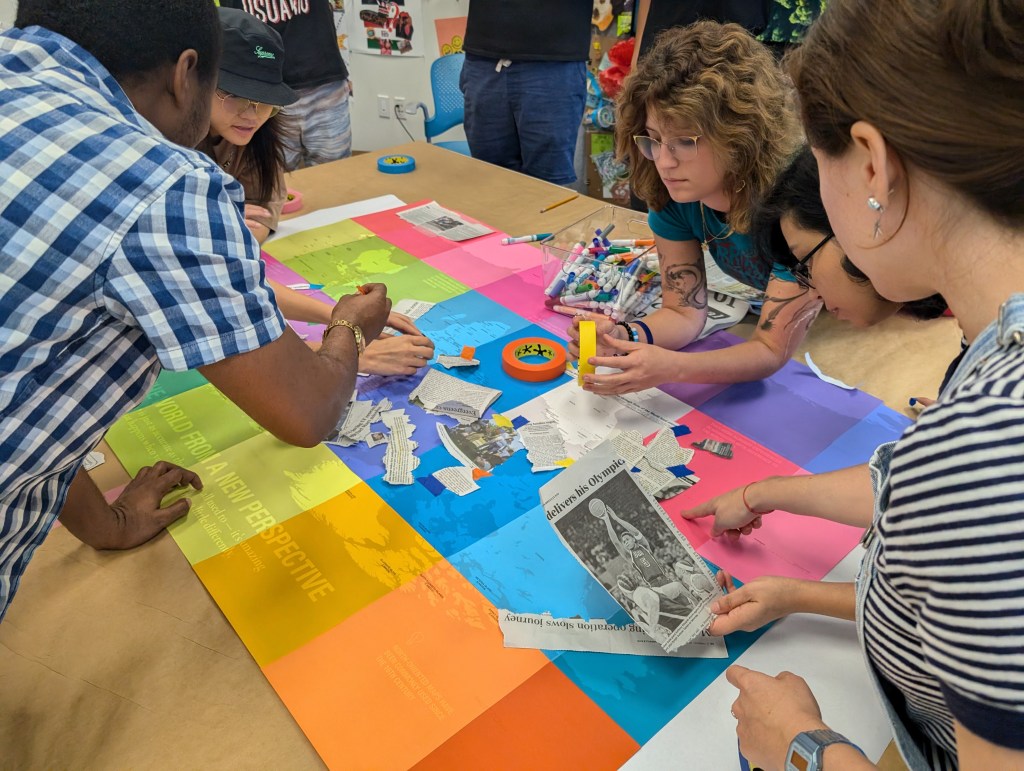
Analyzing design experiments is an important step in processing bouncing interactions and facilitating critical conversations. However, when dealing with large databases (audio, video, transcripts, etc.), this step can become hectic for designers who habitually work with visual databases, both digitally and manually. In the past few months, we have researched co-design methods in data analysis, one of which is data visual analyses. From the design experiment transcripts, we annotated data with codes and themes linked to literature reviews. Using low-tech materials, we captured the complexities of data through creative making and conversations. The process was lively, filled with interactions, reflections, and actions often not included in digital data analysis.
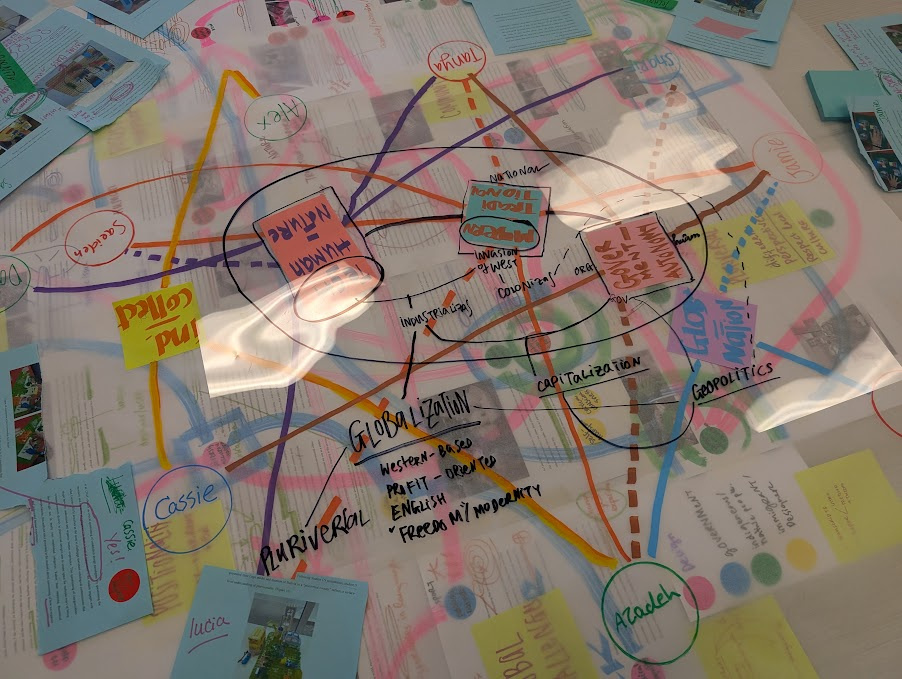
Visual analyses in collaboration with Azadeh Jalali and Dr. Frederick van Amstel, on pluriversal design from the lenses of our graduate studio in November 2024.
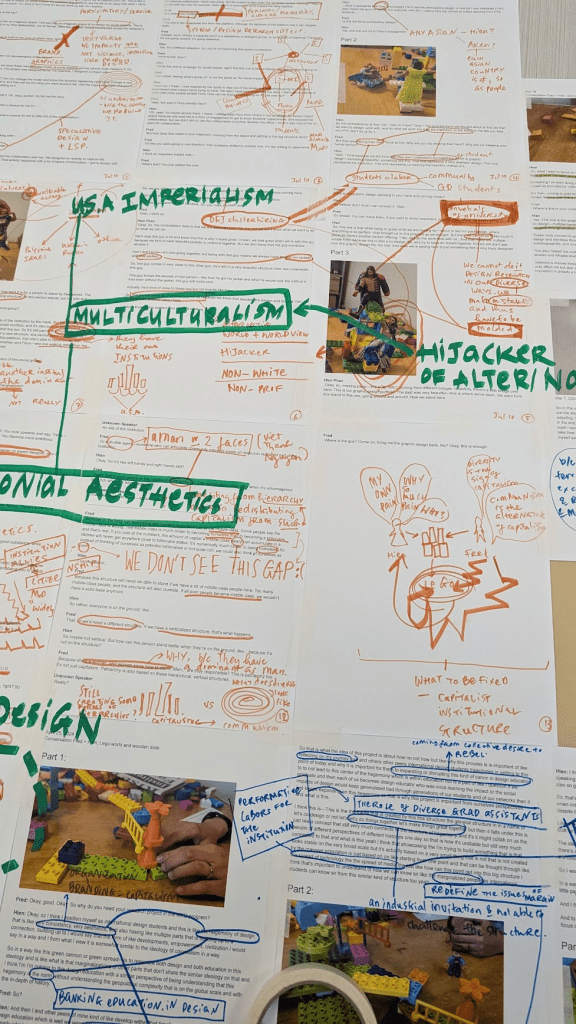
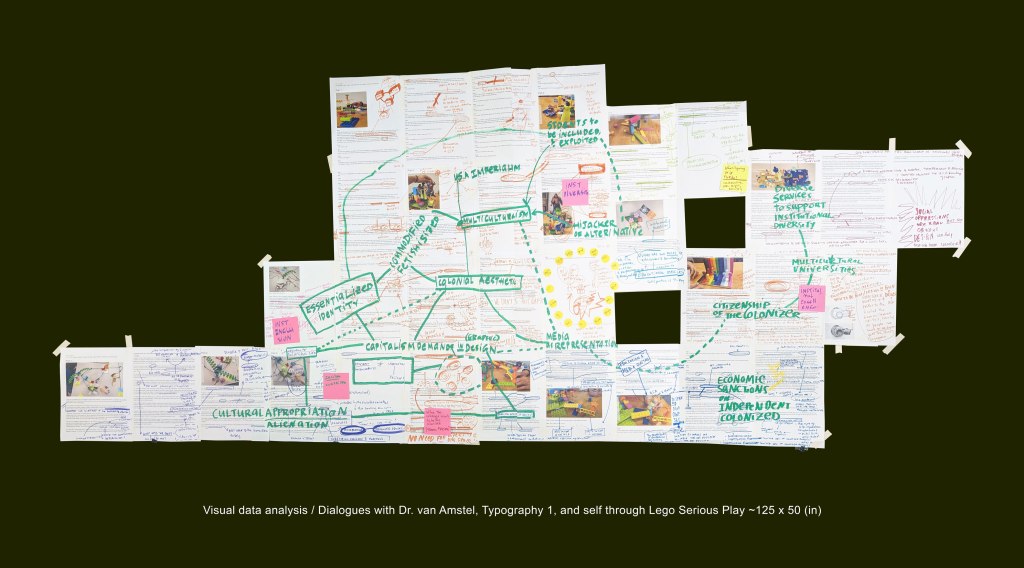
Emerging themes of literature review that can been seen in data analysis of Lego Serious Play collaboration between Hien Phan and Dr. Frederick van Amstel (2024) in January 2025.
The patched visual analysis was started when I was collaborating with Jamie Zhang, when we analyzed the RU workshop in the graduate studio in October 2024. Each of us had different approaches in data annotations and theme analyses. We regathered and discussed on the themes emerging from the chaotic patching analysis that I came up with. That is when this style is repeated and developed through collaborations in the graduate studio.
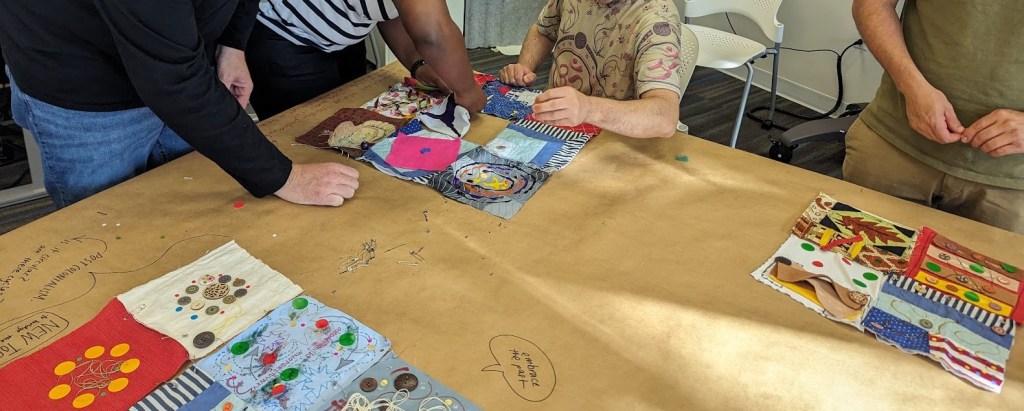
In the conversation with professors and colleagues, I realized that the patching style of this visual analysis has been highly inspired by the decolonial quilt-making with the graduate studio. The monster aesthetics (Angelon & van Amstel, 2021) is embedded in the making process when we patched many pieces that resembled our thoughts. However, as professional designers, we perpetuated the grid layout of these pieces without necessarily questioning the haunting effects of modernism in design – from digital platform to the physical design experiment.
The monster aesthetics, however, unveiled itself more vividly when I let the data connected by itself. As how I was a facilitator and complicator in codesign experiment, I am the supporter of emerging connections between the data pieces. The monster aesthetics in the design experiments now secured its liveliness and incarnated in the forms of data pieces. In this process, I am the observer, the applauder, and the thinker in response to the design experiments in rewind!Each visual analysis is then taken photos and patched digitally, again, through Adobe Photoshop.
References:
Angelon, R., & van Amstel, F. (2021). Monster aesthetics as an expression of decolonizing the design body. Art, Design & Communication in Higher Education, 20(1), 83-102.
Jordan, B., & Henderson, A. (1995). Interaction analysis: Foundations and practice. The journal of the learning sciences, 4(1), 39-103.
Acknowledgements: These visual analyses are the research in making, collectively done by Hien Phan, Jamie Zhang, and Azadeh Jalali. These experiments are extended parts of the design experiment at the course MxD Research and Practice, Fall 2024, and Seminar, Spring 2024, taught by Dr. Frederick van Amstel.



 Hiền Phan