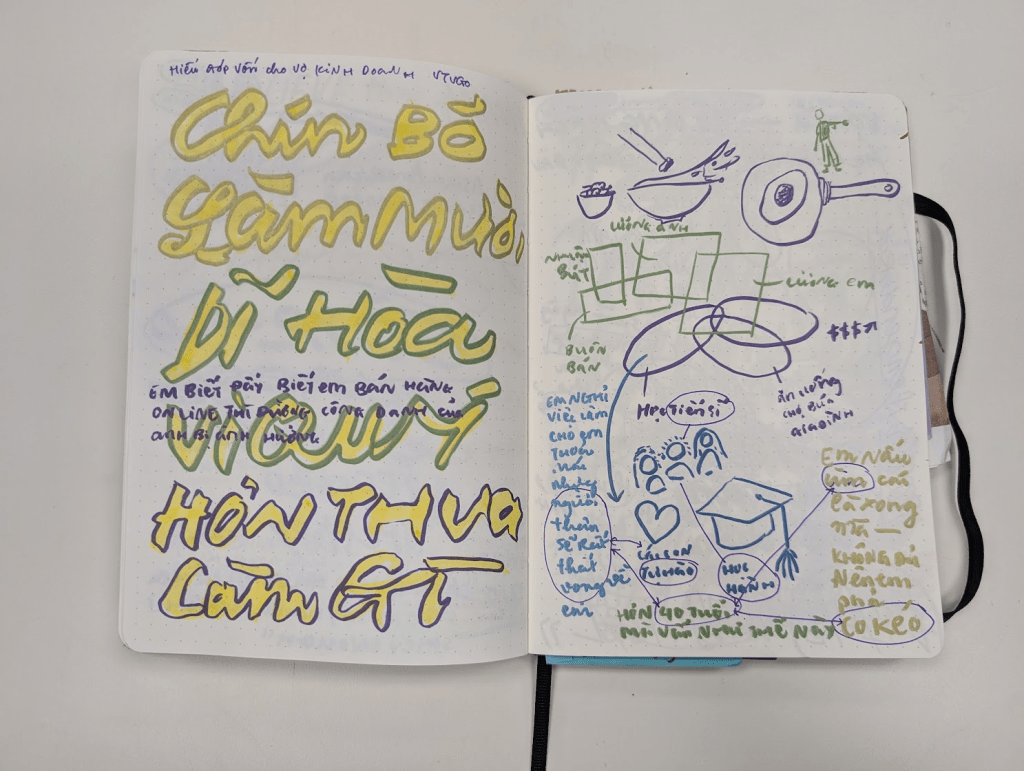
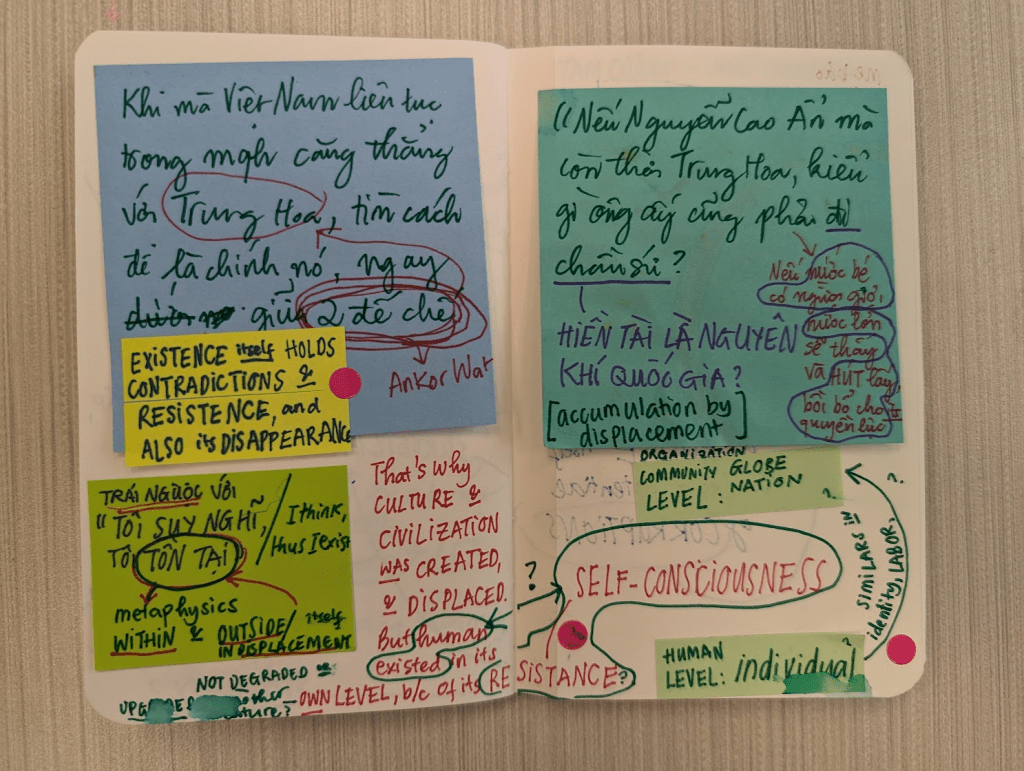
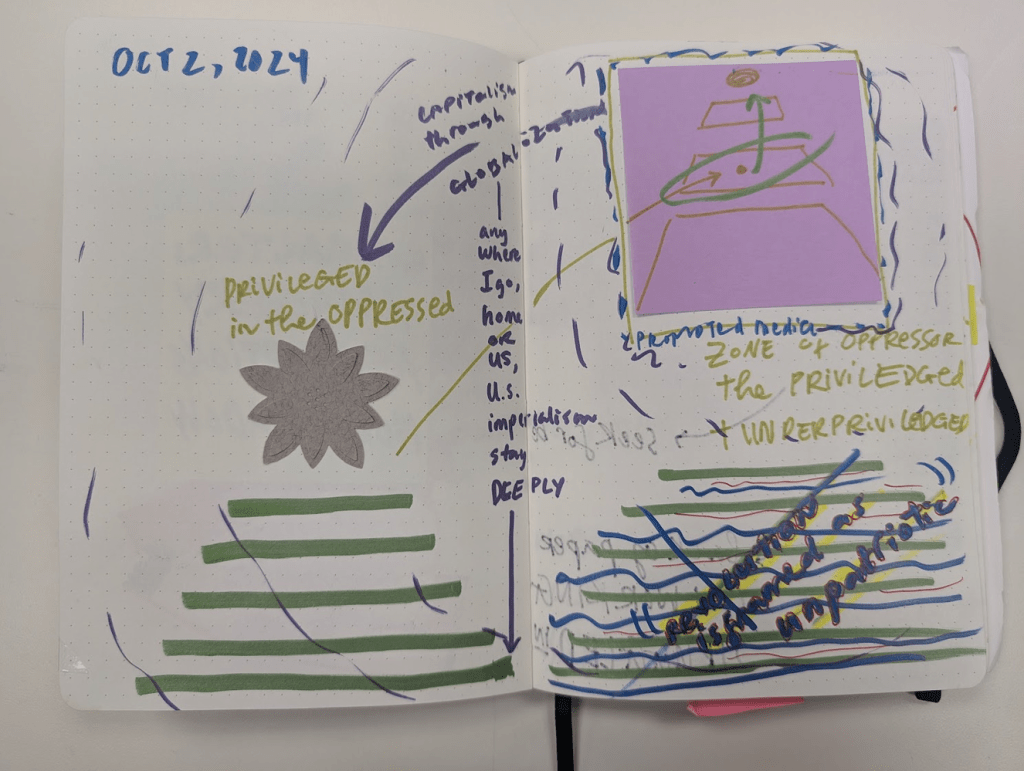
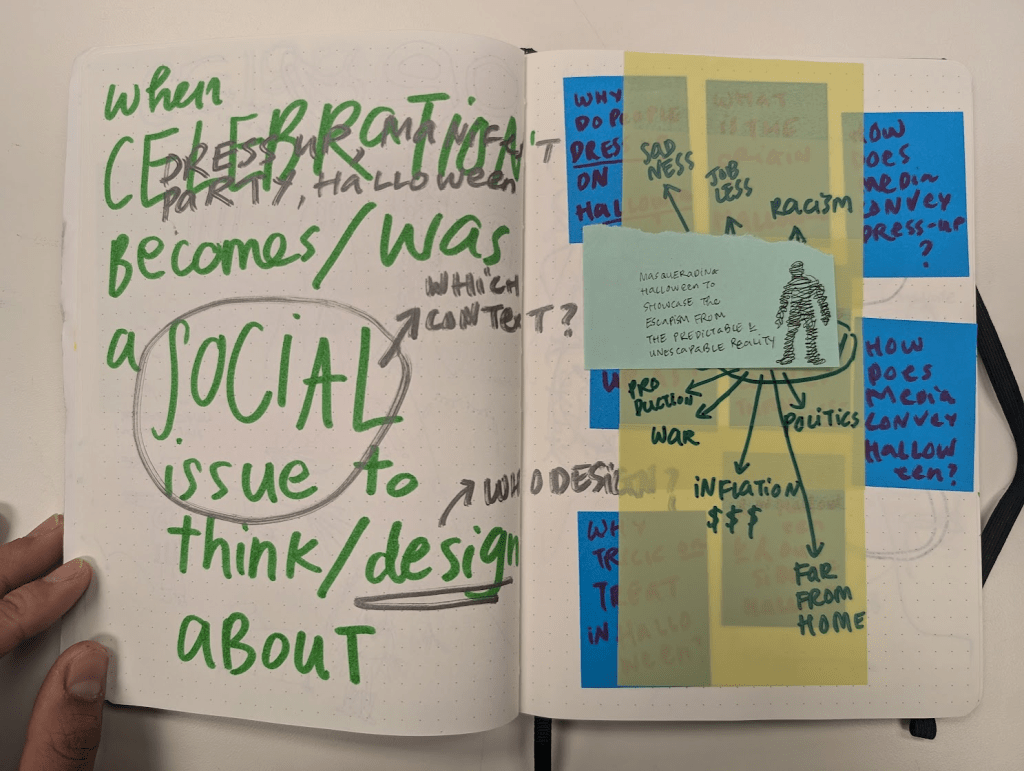
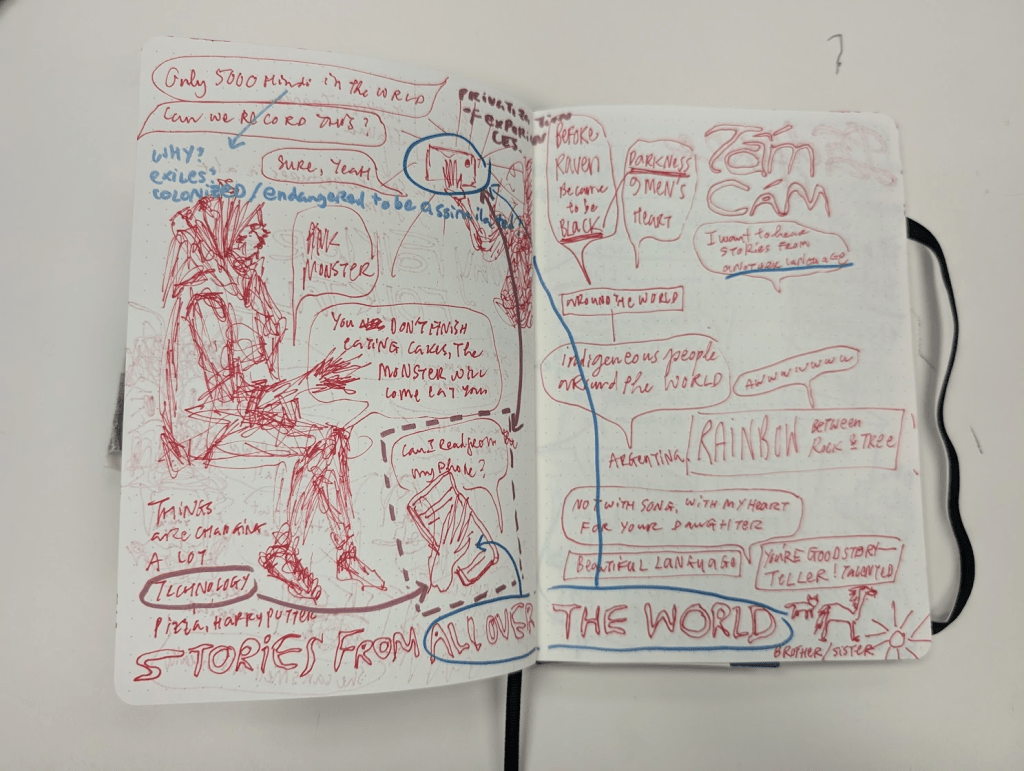
Per Paulo Freire, reading and rereading the world through our words allows us to see ourselves in a constantly changing world. Reading the world through others’ perspectives is a common practice, facilitated by books, newspapers, media, and social media. This habit often prevents us from actively crafting and reflecting on our own interpretations of the world. As I research and practice the autoethnographic design method, I have been engaging with visual diaries/journals to capture my world and the world of others. Over the past six months, I have used notebooks, notecards, sticky notes, and other paper forms to document my world visually. This process usually includes two steps: (1) documenting what I have observed/listened to, and (2) annotating these documentations immediately or some time after revisiting the notebooks. Initially, my journal pages were mainly filled with descriptions of what I saw and heard—a mix of text and images. Gradually, as my skills in fast handwriting and critical, illustrative annotation advanced, the live descriptions were enriched with timely questions and insights. I was able to link live events with systemic issues that we often do not discuss outside socio-political news media and academic research. The visual diary is an ethnographic observation method that allows for creativity and flexibility in the observer’s critical thinking and reflections.
While this ethnographic documentation projects empirical research through the lenses of the researcher, it demonstrates the agency of each individual in capturing the world through their own lenses, using low-tech materials. This method encourages an observer to position herself within the world she observes as she travels and experiences it. Often, we mistake worldviews for a finished media project that others can watch and enjoy. However, the worldviews in these visual diaries pose questions that the observer, as a researcher, often mistakes for facts, which have been normalized by dominant narratives.
References:
- Freire, P. (1985). Reading the world and reading the word: An interview with Paulo Freire. Language arts, 62(1), 15-21.
- van Amstel, Frederick. “Expansive Visual Thinking.” Frederick van Amstel, 6 Sept. 2024, fredvanamstel.com/talks/expansive-visual-thinking.
- van Amstel, Frederick. “Visual Diary.” Frederick van Amstel, 6 Nov. 2024, fredvanamstel.com/tools/visual-diaries.
Acknowledgements: This design method has been introduced to me by Dr. Frederick van Amstel in the ethnographic observation practice, June 2024.

 Hiền Phan